Weather Pivot™

Launching spring 2027 across the continental US

Know which site needs a call, and when.

Weather Pivot™ is a weather alert app for job sites and outdoor events. It watches each site during the hours you choose, even when no one is there. When lightning strikes within 10 miles, or rain, wind or heat crosses the limits you set, you and your crew get an alert.

Free trial at launch, no card needed.

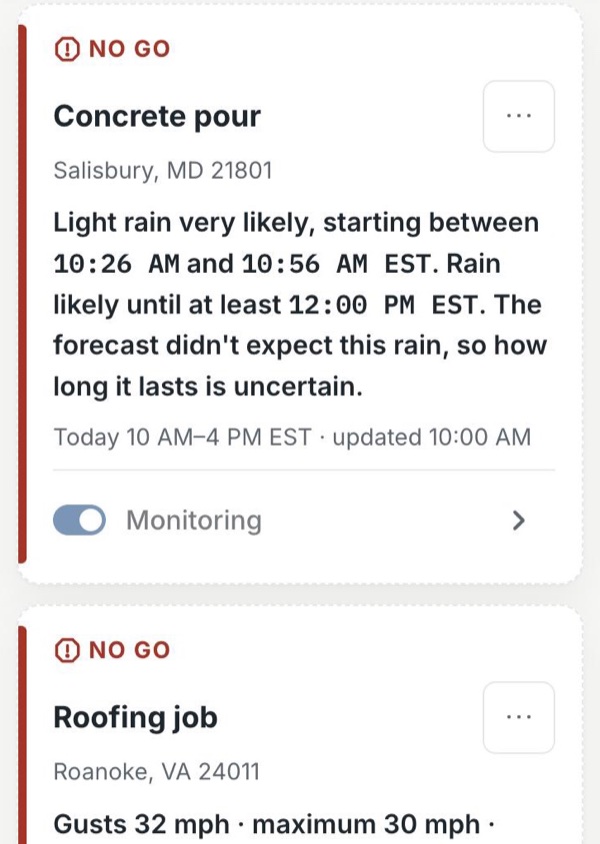
The Weather Pivot site list: a concrete pour at NO GO, with light rain very likely between 10:26 and 10:56 AM.

What Weather Pivot helps with

1

Safety

Lightning within 10 miles stops work and starts a 30-minute all-clear countdown, and the all clear goes out on its own. National Weather Service warnings, high wind and heat reach you and your crew as they happen.

2

Time and money

Make the call the night before or before the shift, with the hourly forecast for every site checked against your limits. Fewer crews sent to sites that get rained out, and fewer pours, coatings and roofs ruined by weather the forecast saw coming.

3

Weather evidence for delay claims

When weather stops work, the Weather Delay Evidence Report records the day: your crew’s stop and resume times, readings from the nearest NOAA weather station and the alerts you got, in one PDF.

Alerts that name the site and what’s coming

Each alert says which site, what kind of weather and when. You get it in the app; your crew gets it by text.

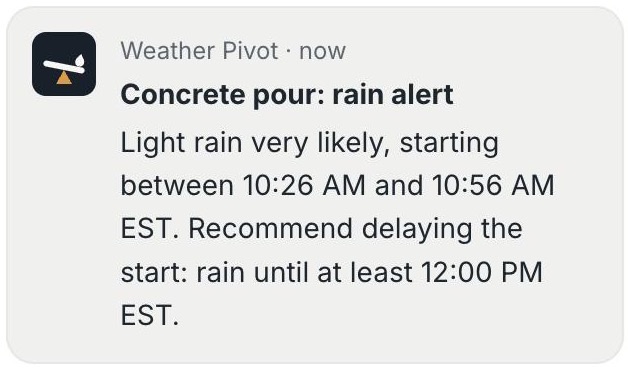
Weather Pivot alert: Concrete pour: rain alert. Light rain very likely, starting between 10:26 AM and 10:56 AM. Recommend delaying the start: rain until at least 12:00 PM.
A rain alert as the app shows it.

Built for the five-second glance

Every screen answers one question first: which site needs a decision, and by when.

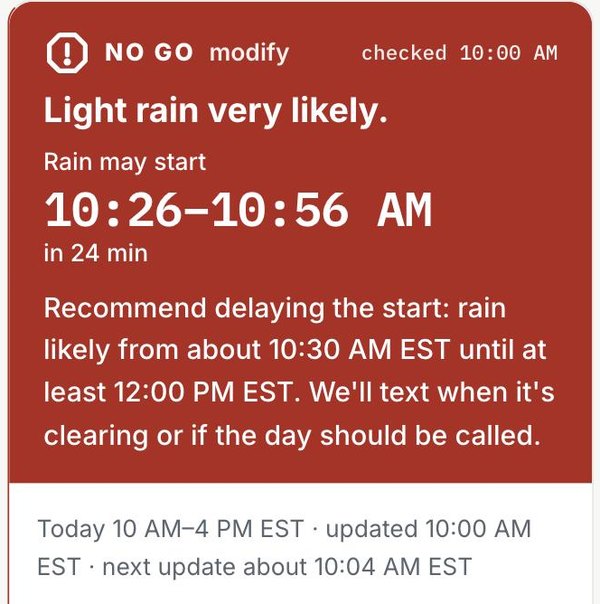
A site's status: NO GO, light rain very likely, rain may start 10:26 to 10:56 AM, in 24 minutes, with a recommendation to delay the start.

Rain

When rain will reach the site

Live NOAA radar is checked every few minutes during your monitored hours. Rain alerts go out from about 15 minutes to 2 hours before rain reaches the site. Once rain is within an hour, the alert gives an estimated arrival window, such as 10:26 to 10:56 AM.

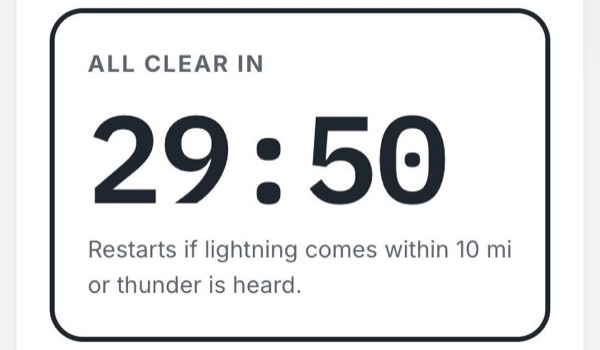
Lightning countdown: all clear in 29 minutes 44 seconds; restarts if lightning comes within 10 miles.

Lightning

A lightning stop, and a countdown to the all clear

Weather Pivot watches a national lightning detection network around every site for you. When lightning strikes within 10 miles, the site goes to NO GO and a 30-minute countdown starts. Every new strike within 10 miles restarts it, and the all clear goes out on its own when the time is up.

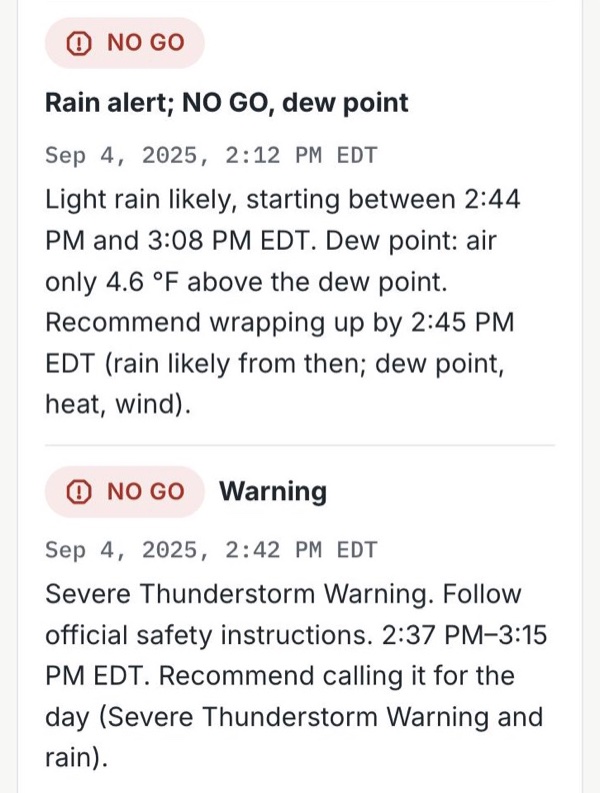
A site's alert log: a rain alert 32 minutes before rain with a recommendation to wrap up by 2:45 PM, then a Severe Thunderstorm Warning.

Records

A record of every alert and all clear

When the call is clear, an alert says what to do, such as wrapping up by 2:45 PM before rain arrives, or delaying the start until rain passes. Each site keeps a time-stamped log of every alert and all clear, with a spreadsheet download.

Weather evidence for delay claims

Weather Delay Evidence Report

When weather stops work, Weather Pivot keeps a time-stamped record of that delay day for the site. It puts in one place the stop and resume times your crew enters, what the nearest NOAA weather station measured, radar estimates of rain over the site, lightning detected nearby, any National Weather Service warnings and the alerts Weather Pivot sent.

It also shows how the month compares with normal weather for that location. Export it as a PDF for your daily log, a client, a delay notice or a delay claim, or as a spreadsheet. The first version is preliminary, and it updates on its own when NOAA publishes its final data.

Screens on this page are Weather Pivot replaying real days on archived NOAA data: a concrete pour in Salisbury, Maryland on 6 June 2025 and a roofing job in Roanoke, Virginia on 4 September 2025.

Also included

  • Limits for your kind of work

    Wind, heat, cold and rain limits for your kind of work, each one naming the published standard it comes from. Change any of them per site.

  • Alerts that reach the crew

    Text alerts for up to 10 people per site, with no app or login for them. Anyone can mute the rest of today.

  • Official warnings, never held back

    National Weather Service warnings for your site come straight through, whatever your other settings.

  • Heat and air quality

    Heat alerts with work and rest guidance, plus alerts when air quality turns unhealthy.

  • Only during your monitored hours

    Each site is watched during the hours you choose to monitor. Pause any site until tomorrow, or until a date you pick.

  • Every site on one board

    GO, CAUTION and NO GO, each with its own word, shape and color, readable in direct sun. Sites that need a decision sort to the top.

For anyone keeping an eye on a site they can’t watch

Contractors and crews, event and rental companies, leagues and camps, property managers, and parents keeping track of the weather at a practice or game. It also works for personal plans, like a campsite or a trailhead for the weekend.

  • General construction
  • Concrete
  • Asphalt and paving
  • Roofing
  • Painting and coatings
  • Cranes and lifts
  • Landscaping and tree care
  • Tents and events
  • Youth sports

What we promise, and what we don’t

No forecast is perfect. Radar sees rain that already exists, so a storm that forms right over a site can arrive with little warning. Weather Pivot helps you make the call; it doesn’t replace your safety plan or official warnings.

Questions and answers

What is Weather Pivot?

Weather Pivot is a weather monitoring and alert app for job sites and outdoor events. You add each site with its address, the hours you want it monitored and your limits. Weather Pivot then alerts you and your crew when rain, lightning, wind, heat or an official warning affects that site.

What does Weather Pivot help with?

Three things. Safety: lightning stops, official warnings, and wind and heat limits. Saving time and money: make the call the night before or before the shift, so crews aren’t sent to sites that get rained out and work isn’t ruined by weather the forecast saw coming. Weather evidence for delay claims: a time-stamped record of each day weather stopped work.

Who is Weather Pivot for?

Anyone who needs to keep an eye on the weather at a place they can’t watch themselves: contractors and crews, event and tent rental companies, sports leagues and camps, property managers, and parents keeping track of the weather at a practice or game.

How does Weather Pivot know when rain is coming?

It checks live NOAA radar every few minutes during each site’s monitored hours and estimates when rain will reach the site. For later in the day it uses the NOAA hourly forecast.

How much warning do rain alerts give?

Rain alerts go out from about 15 minutes to 2 hours before rain reaches the site. Once rain is within an hour, the alert gives an estimated arrival window, such as 10:26 to 10:56 AM.

How does lightning monitoring work?

Weather Pivot monitors a national lightning detection network around each site during its monitored hours. A strike within 10 miles puts the site at NO GO and starts a 30-minute all-clear countdown. Each new strike within 10 miles restarts it, and the all clear is sent automatically.

Does Weather Pivot replace National Weather Service warnings?

No. National Weather Service warnings for your site come straight through and are never held back. Weather Pivot adds site-specific timing and your own limits. It does not replace official warnings or your safety plan.

How do crews get alerts?

The account owner gets alerts in the app. Crew members get text messages and email, up to 10 people per site, with no app or login needed.

What is the Weather Delay Evidence Report?

A time-stamped record of each day weather stopped work at a site. It brings together your crew’s stop and resume times, readings from the nearest NOAA weather station, radar rain estimates, lightning detected nearby, National Weather Service warnings and the alerts Weather Pivot sent, and compares the month with normal weather for that location. You can export it as a PDF for a daily log, a client, a delay notice or a delay claim, or as a spreadsheet. It starts as preliminary and updates when NOAA publishes its final data.

Where is Weather Pivot available?

Weather Pivot launches in spring 2027 across the continental United States. Free pilots run in January and February 2027.

How much does Weather Pivot cost?

Prices will be announced at launch. There will be a free trial, with no card needed.

How do I get Weather Pivot?

Join the waitlist on weatherpivot.com. A few businesses will join a free pilot in January and February 2027, and everyone on the list hears first at launch.
Join the waitlist

Be first in line at launch. A few businesses will join a free pilot in January and February 2027; tick the box if you’d like to be considered.

We use your email only to tell you about Weather Pivot’s pilot and launch. We never sell it, and you can ask us to delete it at any time. Privacy · hello@weatherpivot.com